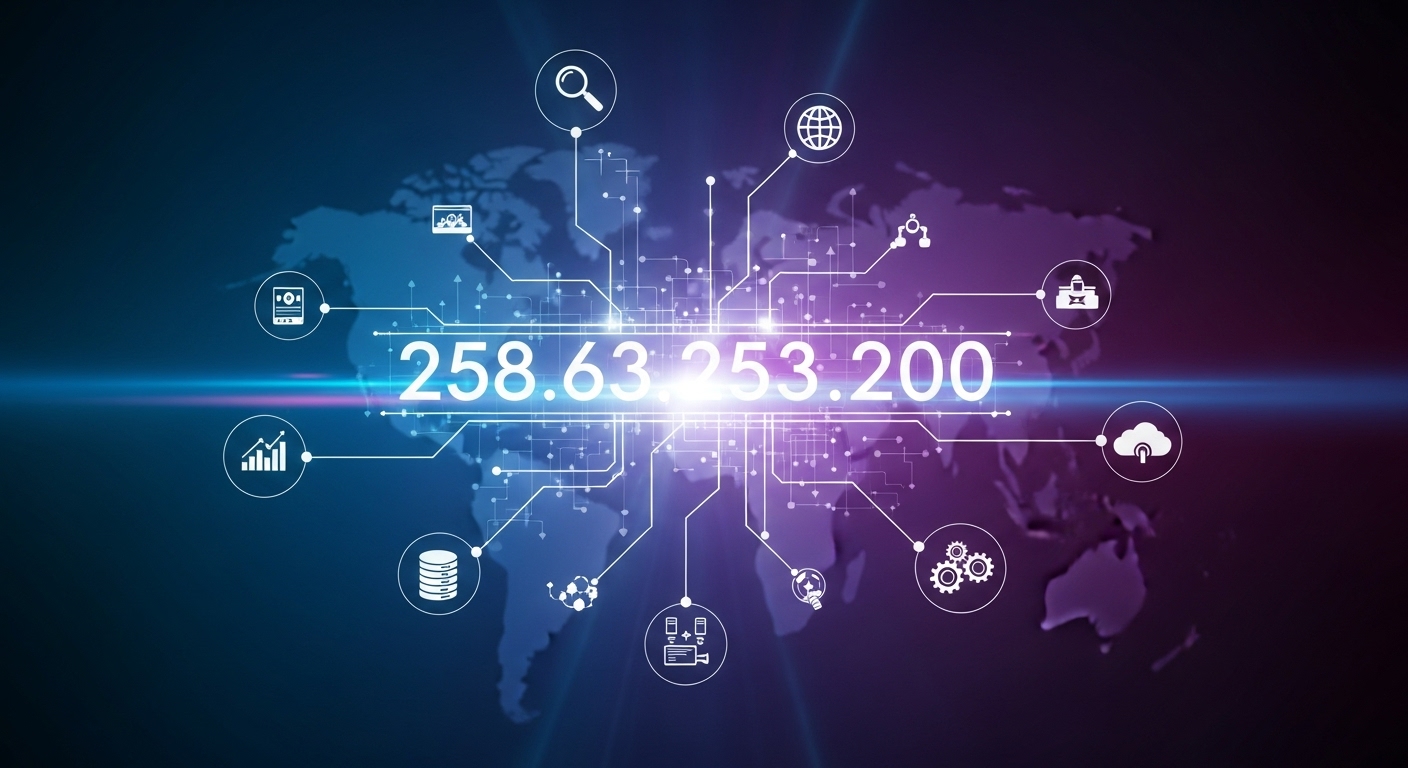
The internet feels invisible, but behind every website, application, and digital interaction lies a structured system that keeps everything connected. At the heart of this system are IP addresses, and 258.63.253.200 opens the door to understanding how these numerical identifiers shape the digital world. While it may appear to be just a sequence of numbers, 258.63.253.200 represents an opportunity to explore how IP addresses function, why they matter, and how they influence communication, security, and data exchange across the internet.
Understanding IP Address Basics Through 258.63.253.200
To fully appreciate 258.63.253.200, it helps to understand what an IP address is. An IP address, short for Internet Protocol address, is a numerical label assigned to devices connected to a network. These addresses act like digital mailing locations, ensuring data reaches the correct destination. Without IP addresses, devices would have no reliable way to find each other.
In IPv4, which is the most widely used version, an IP address consists of four numerical blocks separated by dots. Each block typically ranges from 0 to 255. This structure allows billions of unique combinations, making global connectivity possible. 258.63.253.200 fits into this conceptual framework and helps illustrate how addressing works at a technical and educational level.
The Structure Behind 258.63.253.200 and IPv4 Addressing
The structure of 258.63.253.200 highlights the importance of numerical segmentation in IPv4. Each segment, known as an octet, represents eight bits of data. These octets work together to create a unique identifier that networks use to route traffic efficiently.
Within the IPv4 system, addresses are divided into classes and ranges, some reserved for private networks and others for public use. While not every numerical combination is valid in practice, examining 258.63.253.200 helps users understand why limits exist and how strict formatting rules maintain network stability.
Table Showing IPv4 Address Segmentation with 258.63.253.200
| Segment Position | Numerical Value | Purpose in Addressing |
|---|---|---|
| First Octet | 258 | Identifies network range |
| Second Octet | 63 | Refines network location |
| Third Octet | 253 | Specifies subnet details |
| Fourth Octet | 200 | Identifies host device |
This table demonstrates how each part of an IP address contributes to routing and identification, reinforcing why proper formatting is essential.
Why 258.63.253.200 Sparks Curiosity in Networking Discussions
The fascination with 258.63.253.200 often comes from its ability to trigger deeper questions about IP validation, address allocation, and protocol limitations. Networking professionals regularly examine such examples to teach why some addresses function correctly while others exist only as theoretical or educational references. Understanding these distinctions improves troubleshooting skills and enhances comprehension of how routers and servers make decisions in milliseconds. Even hypothetical IPs like 258.63.253.200 can help learners visualize how networks interpret numerical data.
The Role of 258.63.253.200 in Explaining Public and Private IP Concepts
Public and private IP addresses serve different roles in networking, and 258.63.253.200 provides a gateway to that explanation. Public IPs are visible on the internet and allow devices to communicate globally, while private IPs are restricted to internal networks such as homes or offices. Routers act as translators between these two spaces, using techniques like Network Address Translation. Studying addresses similar to 258.63.253.200 helps clarify why some IPs can be accessed externally while others remain hidden for security reasons.
Table Comparing Public and Private IP Characteristics
| Feature | Public IP | Private IP |
|---|---|---|
| Internet Visibility | Globally reachable | Internal network only |
| Assigned By | Internet Service Providers | Local routers |
| Security Exposure | Higher | Lower |
| Example Context | Web servers | Home devices |
This comparison highlights the structural logic that governs internet communication.
How 258.63.253.200 Connects to Internet Security Awareness
Security is one of the most critical aspects of modern networking, and 258.63.253.200 plays a role in raising awareness about IP-based risks. Cybersecurity systems monitor IP addresses to detect suspicious behavior, prevent unauthorized access, and enforce geographic restrictions. Firewalls, intrusion detection systems, and content delivery networks all rely on IP recognition. By understanding how addresses function, users and administrators can better protect their digital assets and reduce vulnerabilities.
Educational Value of 258.63.253.200 for Beginners
For beginners, 258.63.253.200 acts as an entry point into networking education. Learning about IP addresses often feels intimidating, but breaking them down into understandable components makes the subject approachable. This address serves as a discussion starter that encourages curiosity rather than technical overload. Students studying IT, cybersecurity, or computer science often encounter sample IPs early in their learning journey. These examples help bridge the gap between theory and real-world application.
The Relationship Between 258.63.253.200 and DNS Systems
Domain Name System technology translates human-friendly website names into IP addresses. While users remember names, computers rely on numbers. 258.63.253.200 illustrates why DNS is essential, as memorizing numerical strings would be impractical for everyday use. When a user types a website address into a browser, DNS servers locate the corresponding IP and establish the connection. This seamless process happens in seconds, demonstrating the elegance of internet architecture.
Table Showing DNS Resolution Flow
| Step | Action | Result |
|---|---|---|
| User Input | Domain name entered | DNS query initiated |
| DNS Lookup | Server searches records | IP identified |
| Connection | Browser connects | Website loads |
Understanding this flow makes the internet feel less mysterious and more logical.
How 258.63.253.200 Fits Into IPv4 Exhaustion Discussions
IPv4 exhaustion is a major topic in networking, and 258.63.253.200 helps contextualize the issue. With billions of devices online, available IPv4 addresses are limited. This scarcity led to the development of IPv6, which offers a vastly larger address pool. While IPv4 remains dominant, studying addresses like 258.63.253.200 highlights why the transition to newer protocols is necessary for future growth.
Business and Enterprise Relevance of 258.63.253.200
Businesses rely heavily on IP addressing for internal systems, cloud services, and customer-facing platforms. 258.63.253.200 symbolizes the importance of proper address management in enterprise environments. Misconfigured IPs can lead to downtime, security risks, or performance bottlenecks. Organizations invest in IP planning strategies to ensure scalability and reliability, reinforcing how foundational addressing is to digital success.
The Human Side of Understanding 258.63.253.200
Despite being technical, IP addresses affect everyday life. Streaming services, online shopping, video calls, and remote work all depend on addressing systems. 258.63.253.200 reminds us that behind every smooth online experience is a carefully coordinated network infrastructure. Recognizing this connection helps users appreciate the invisible systems that support modern communication.
The Future of Addressing Beyond 258.63.253.200
Looking ahead, IP technology will continue evolving. While 258.63.253.200 belongs to discussions centered on IPv4, the future increasingly points toward IPv6 adoption. This shift promises improved efficiency, security, and scalability. As smart devices, artificial intelligence, and global connectivity expand, addressing systems must adapt. Understanding foundational concepts now prepares users for tomorrow’s internet.
Final Thoughts
The journey through 258.63.253.200 reveals that IP addresses are more than numbers. They are the backbone of digital communication, enabling devices to connect, share, and interact across vast distances. By exploring their structure, purpose, and implications, we gain a deeper appreciation for the internet’s design. Whether viewed from a technical, educational, or everyday perspective, 258.63.253.200 serves as a gateway to understanding how the digital world stays connected.