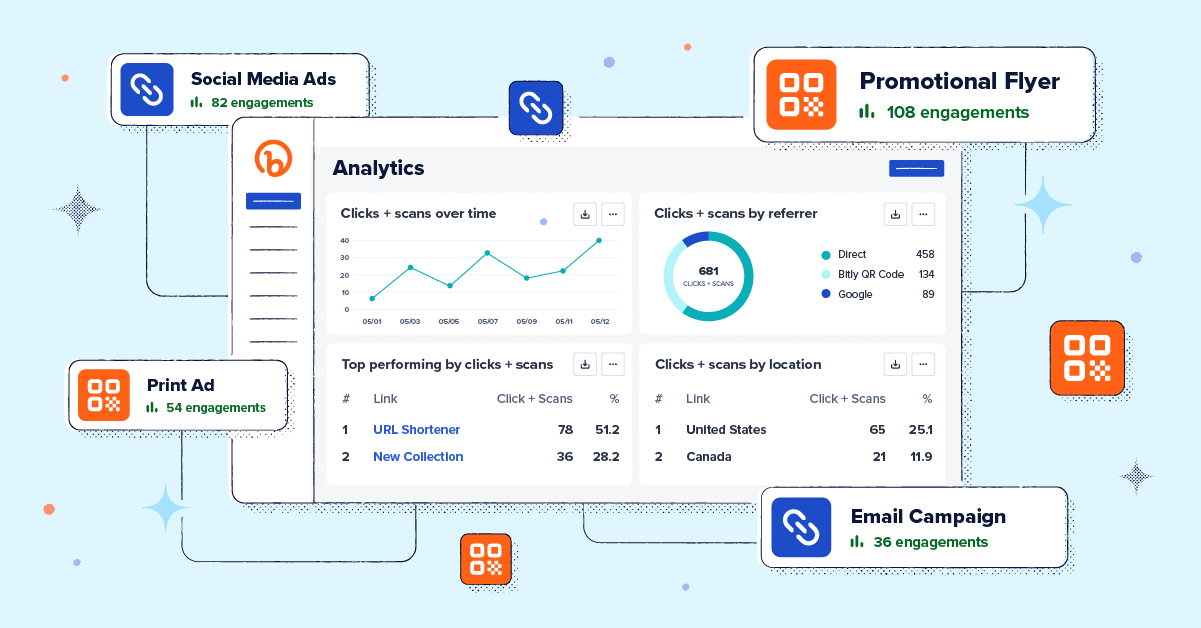
On a damp Tuesday evening in Singapore’s central business district, a founder I’ll call Arjun stared at a dashboard glowing red. Customer churn was rising, acquisition costs were climbing, and his once-loyal community seemed to be evaporating into the noise of the internet. In an age where brands can reach anyone, anywhere, at any time, how can they still feel invisible? That paradox is at the heart of what many entrepreneurs are beginning to describe as hothaylost—a state of digital overexposure paired with strategic disorientation. It’s not about failure. It’s about fragmentation. And for founders navigating today’s hyperconnected economy, understanding this phenomenon may be the difference between scaling and stalling.
Understanding Hothaylost in the Attention Economy
The modern marketplace operates inside what economists call the “attention economy,” a term popularized by thinkers like Herbert A. Simon decades ago but now more relevant than ever. Attention, not information, is scarce. Entrepreneurs aren’t just competing with rivals; they’re competing with everything.
Hothaylost emerges when businesses expand their presence across platforms, channels, and technologies without a unifying strategic center. Social media campaigns multiply. Martech stacks grow heavier. AI tools promise automation and personalization at scale. Yet amid the expansion, clarity erodes.
Founders often mistake motion for momentum. They launch podcasts, build communities, invest in influencer marketing, adopt generative AI tools, and optimize for every new algorithm shift. The result is activity sometimes impressive activity but not always coherence. Hothaylost describes that quiet drift from purpose.
Why Tech-Driven Companies Are Especially Vulnerable
Technology startups, ironically, are among the most susceptible. Their cultures celebrate experimentation, iteration, and speed. These are strengths. But without disciplined narrative control and operational alignment, they can quickly spiral into scattered execution.
Consider how the growth playbook evolved in the era shaped by companies like Google and Meta. Performance marketing became data-driven and hyper-optimized. Attribution models promised precision. Dashboards proliferated. Entrepreneurs learned to obsess over metrics.
Yet metrics can mislead when divorced from meaning. A spike in engagement doesn’t always translate into durable trust. A surge in traffic doesn’t guarantee loyalty. Founders may feel empowered by data but disconnected from customers. Hothaylost often surfaces at that intersection: when analytics expand but insight shrinks.
The Fragmentation of Brand Identity
Brand once meant a story told consistently over time. In the digital era, that story splinters across platforms, each with its own language and cadence. What works on LinkedIn may fall flat on TikTok. Long-form thought leadership competes with ephemeral video. Tone shifts. Visual identity evolves. Messaging adapts to algorithms.
There is nothing inherently wrong with adaptation. In fact, it’s essential. But when adaptation turns into improvisation without direction, brands lose their center of gravity.
Entrepreneurs report a familiar sensation: customers recognize the logo but struggle to articulate what the company stands for. Employees deliver projects efficiently yet feel disconnected from a larger mission. Investors sense potential but question differentiation. That is the subtle erosion that defines hothaylost.
The AI Acceleration Effect
Artificial intelligence has amplified the problem. Tools powered by large language models can generate content, code, and campaigns at astonishing speed. Productivity soars. Output multiplies. But output is not strategy. In conversations with founders across North America and Europe, a pattern is emerging. AI lowers the cost of publishing. As a result, content volume increases dramatically. Blogs expand. Email sequences grow longer. Social posts multiply daily. Yet audience engagement plateaus or declines. The issue isn’t AI itself. It’s the temptation to scale noise instead of sharpening narrative. Hothaylost thrives in abundance. When everything can be produced instantly, restraint becomes a competitive advantage.
A Framework for Recognizing the Signs
Entrepreneurs often ask how to diagnose whether their organization is drifting into this state. While every business is unique, certain patterns recur.
Below is a high-level comparison that highlights the difference between strategic clarity and hothaylost conditions:
| Dimension | Strategic Clarity | Hothaylost State |
|---|---|---|
| Core Message | Clearly defined and consistent | Frequently shifting or diluted |
| Channel Strategy | Purpose-driven selection | Presence on every platform without focus |
| Metrics | Aligned with long-term goals | Short-term vanity metrics dominate |
| Team Alignment | Shared understanding of mission | Siloed initiatives and mixed priorities |
| Customer Experience | Cohesive and intentional | Fragmented touchpoints |
This table is not a checklist but a mirror. When multiple columns on the right resonate, it may be time to recalibrate.
Reclaiming Strategic Center
So how do founders step back from hothaylost and regain direction? The first step is subtraction. In a world obsessed with scaling, subtraction feels counterintuitive. Yet the most resilient brands I’ve observed share a disciplined willingness to say no. They narrow channels. They simplify messaging. They align teams around fewer, clearer priorities.
This approach echoes the philosophy of companies like Apple, which historically prioritized product focus over sprawling portfolios. Focus creates narrative power.
Second, leaders must reconnect with first principles. Why does the company exist beyond revenue targets? What unique tension does it resolve for customers? These questions are not abstract. They guide product development, hiring decisions, and marketing voice.
Third, founders should institutionalize reflection. Quarterly strategy resets. Cross-functional storytelling sessions. Direct customer interviews. These practices restore alignment between intention and execution. Hothaylost rarely appears overnight. It accumulates gradually. Correction, likewise, requires deliberate effort.
The Human Cost of Digital Drift
There’s another dimension entrepreneurs seldom discuss: psychological fatigue. When organizations operate in a constant state of reactive expansion, teams experience cognitive overload. Campaign calendars fill. Notifications multiply. Context switching becomes routine. Creativity declines under pressure.
In interviews, founders describe feeling perpetually behind despite working longer hours. Teams struggle to distinguish urgent from important. Burnout rises quietly. Hothaylost is not only strategic misalignment. It’s cultural strain.
Addressing it demands leadership maturity. It requires acknowledging that not every trend deserves adoption. Not every new tool warrants integration. Discernment, once considered conservative, is now visionary.
Investors Are Noticing
Venture capital conversations have also shifted. In an era of abundant capital, growth-at-all-costs narratives dominated. But as markets tighten and capital becomes more selective, investors increasingly probe for strategic coherence. They ask What is your durable advantage? How defensible is your brand? Are customers loyal or merely transient?
Startups exhibiting hothaylost symptoms struggle to answer convincingly. Their traction appears impressive on paper but lacks narrative depth. Meanwhile, companies with focused positioning—even if smaller often inspire greater confidence. The lesson for founders is clear: coherence compounds.
Building Resilience in a Hyperconnected World
The digital landscape will not slow down. New platforms will emerge. AI capabilities will expand. Consumer expectations will evolve. The temptation to expand outward will persist. Resilience lies not in resisting change but in filtering it.
Entrepreneurs who thrive in this environment treat every opportunity as a strategic choice rather than an automatic obligation. They evaluate alignment before adoption. They protect brand narrative as carefully as intellectual property.
Most importantly, they cultivate organizational clarity that transcends platforms. When purpose anchors execution, expansion strengthens rather than scatters. Hothaylost, then, becomes less a fate and more a warning signal.
The Deeper Opportunity
There is, paradoxically, an opportunity embedded in this phenomenon. As more companies drift into fragmented presence, those who prioritize coherence stand out. Authenticity becomes differentiating. Focus becomes rare. Entrepreneurs who resist the pressure to be everywhere and instead choose to be meaningful somewhere often build deeper relationships. They command attention not through volume but through value. In that sense, hothaylost is not merely a problem to solve. It is a mirror reflecting the excesses of the digital age. And mirrors, when used wisely, clarify identity.
Conclusion
Back in Singapore, Arjun made a difficult decision. He paused two underperforming channels, redefined his brand narrative, and restructured his marketing team around a single customer journey. Growth slowed briefly. Then engagement strengthened. Churn stabilized. Conversations deepened. He wasn’t everywhere anymore. But he wasn’t hothaylost either. For today’s entrepreneurs and tech leaders, the challenge is not access to tools or data. It is the discipline to align them with purpose. In a world that rewards speed and scale, clarity may be the ultimate competitive advantage.